Checking the inside of your fridge on your smartphone and adjusting the temperature on your commute home is remarkably convenient. But have you ever considered that a refrigerator connected to the internet 24/7 could become a prime target for hackers? Here is why home appliances designed to keep food cold are turning into cyberattack targets.
Key Takeaways
- Hackers breached cooling control systems across over 700 European supermarkets, driving temperatures up to 50°C (with some reports citing up to 80°C) and forcing mass food disposal.
- Due to low-spec chipsets and unchanged default passwords, IoT devices like smart fridges are frequently weaponized for spam campaigns or DDoS botnets (infecting 9,008 devices in South Korea in 2023 alone).
- To stay secure, change factory default passwords on appliances and routers, and isolate smart appliances from PCs using your router’s guest Wi-Fi network.
Why Freezers Spiked to 50°C in Supermarket Cyberattacks
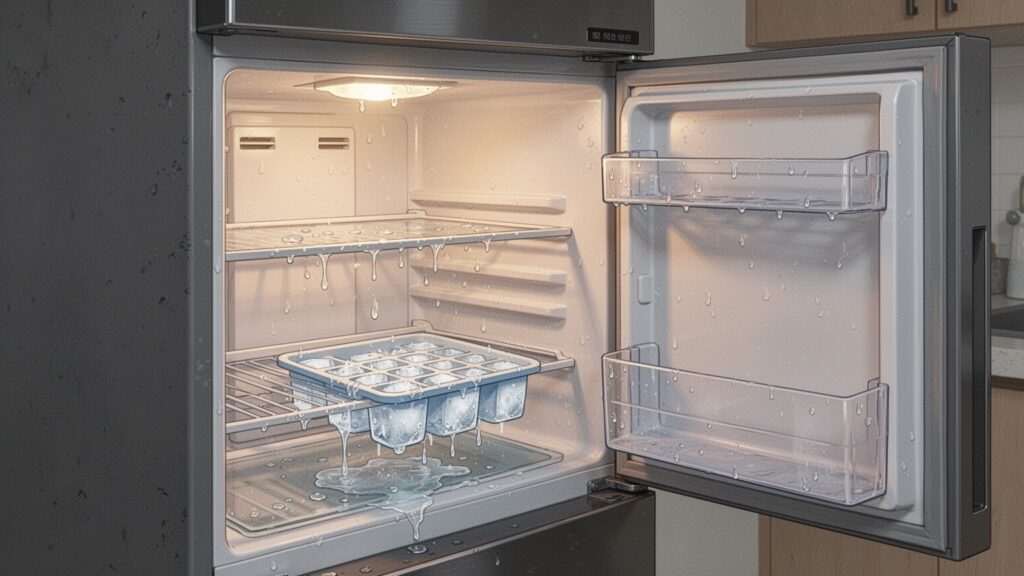
On October 11 and 12, 2026, an extraordinary incident struck more than 700 supermarkets and hypermarkets across France. Hackers penetrated the refrigeration control systems of roughly 150 Intermarché and 80 Carrefour stores.
The attackers arbitrarily extended defrost cycles from the standard one hour to eight hours. As a result, temperatures inside commercial freezers that should have stayed well below freezing surged to 50°C (122°F). Tons of spoiled food had to be discarded, and fires broke out in several locations, causing tens of millions of euros in damage. By November, similar breaches spread across at least seven European countries, impacting 40 Delhaize and 15 Carrefour locations in Belgium, alongside 13 SuperValu stores in Ireland.
According to international reports, including Reuters, the specific group or nation-state behind this widespread attack has not been officially confirmed. A direct organizational link between the October French incident and the November multinational European attacks also remains unverified. In addition, while most news outlets reported temperatures rising to 50°C, some media, such as ETNews, reported spikes up to 80°C. It was the digital equivalent of an intruder remotely hijacking a hot bath valve and cranking it to boiling.
Related Reading
Police Launch Probe into Cyberattacks on Major Banks’ External Systems
Why Toggling Airplane Mode Fixes Sudden Mobile Data Drops
Why Your Home Refrigerator Becomes a Hacker’s Weapon
Refrigerator hacking is not limited to localized temperature sabotage. Poorly defended home appliances can be drafted into cyber armies capable of shutting down global networks.
According to global cybersecurity firm Proofpoint, back in 2014, more than 100,000 smart appliances—including smart TVs, routers, and smart refrigerators—were compromised into a botnet that dispatched 750,000 malicious spam emails. In 2016, the catastrophic DDoS attack on U.S. DNS provider Dyn, which temporarily knocked Twitter and Netflix offline, was fueled by IoT devices running unchanged factory passwords. An investigation by South Korea’s Ministry of Science and ICT and KISA found that 9,008 domestic IoT devices were hijacked by malware as DDoS hosts in 2023 alone.
| Incident | Scale of Hijacked Devices | Primary Impact & Attack Vector |
|---|---|---|
| 2014 Proofpoint Investigation | Over 100,000 appliances (including fridges) | 750,000 malicious spam emails sent |
| 2023 South Korea KISA Report | 9,008 domestic IoT devices | Infected with Mirai malware variants and used as DDoS hosts |
| 2026 Five Eyes Warning | Tens of thousands of IoT devices globally | Used by China-linked hacking groups as pathways for espionage |
In April 2026, intelligence agencies from 10 countries, including the United States, issued a joint warning that China-linked hacking groups such as Volt Typhoon were seizing consumer routers and smart appliances to breach government systems. Meanwhile, research on distributed AI from Anthropic proved that malicious AI models could propagate across low-spec hardware using 15 $55 set-top boxes. However, that was a controlled laboratory test; widespread infections of home consumer refrigerators with malicious AI have not been officially documented.
Locking the Door but Leaving the Window Open: 4 Rules to Protect Your Home
Smart appliances remain easy targets because their low-power, lightweight processors cannot run conventional antivirus software. On top of that, many users keep the default credentials set at the factory and leave management ports exposed to the public internet without firewall protection. At one point, the search engine Shodan indexed at least 4,500 cooling management interfaces completely accessible online.
This is the digital equivalent of double-bolting your front door while leaving your balcony window wide open. If your smartphone, laptop, and smart appliances share the same local Wi-Fi, an intruder who breaches your refrigerator can pivot across the network to compromise online banking details on your personal computer. Protecting your household and devices requires reviewing a few fundamental settings right away.
| Checklist | Action Step | Protection Effect |
|---|---|---|
| Change Passwords | Replace factory default credentials with a strong mix of letters, numbers, and symbols | Blocks brute-force and credential-stuffing attacks |
| Guest Network | Create a separate, dedicated Wi-Fi network on your router for smart appliances | Prevents lateral movement to PCs and banking data if an appliance is breached |
| Disable Port Exposure | Turn off router remote management interfaces and UPnP features | Prevents direct internet discovery (use a secure VPN if remote access is required) |
| Keep Firmware Updated | Enable automatic security updates in companion apps and turn on two-factor authentication (2FA) | Applies manufacturer patches for known software vulnerabilities |
Log in to your router settings right now to replace default passwords and enable a guest Wi-Fi network for your smart appliances.
답글 남기기