Smartphone Battery

  • Can You Charge Your Phone with a 65W Laptop Charger?

    Can You Charge Your Phone with a 65W Laptop Charger?

    Ever hesitated to plug your bulky 65W USB-C laptop charger into your smartphone? It is easy to worry that the extra wattage might overheat the battery or ruin your device. Is it actually safe to use a high-output laptop adapter with your phone?

    Quick Summary

    • Safety: It is completely safe. The phone’s power management chip pulls only what it supports (usually 15W to 25W), regardless of the 65W supply.
    • Failsafe: Chargers start at a safe 5V baseline and only switch to 9V, 15V, or 20V after completing a digital handshake.
    • Cable Rating: Speeds above 45W require a 5A (100W) cable with a built-in E-Marker chip.
    • Fast Charging 2.0: Full 45W charging requires both a PPS-compatible charger and a 5A cable.

    Why High-Wattage Chargers Won’t Damage Your Phone

    Why high-wattage chargers do not damage devices

    In short, connecting a 65W or 100W charger to a 25W-rated phone causes zero harm. The wattage printed on a charger is not the amount of electricity forced into the device—it is simply the maximum output the charger can deliver.

    Think of it like a buffet. Even if 65 servings of food (power) are available, a plate (the smartphone) sized for 25 servings takes only what it can hold.

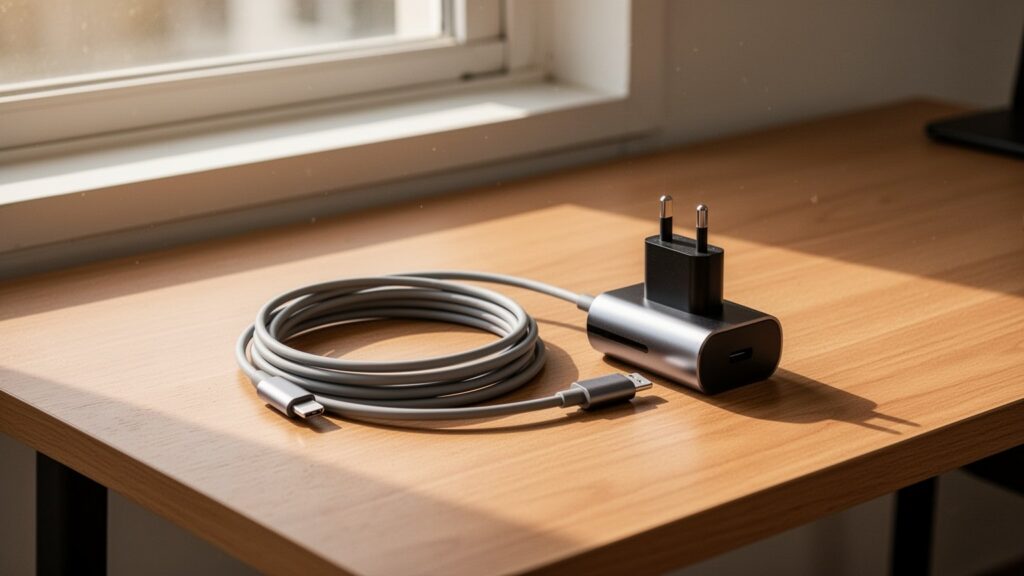
    The secret lies in the digital handshake of the USB-PD (Power Delivery) standard. Devices communicate over the Configuration Channel (CC) pins inside the USB-C cable. When the smartphone’s power management IC requests 25W, the charger approves the request and delivers only that exact amount.

    The Two-Step Safety Check That Prevents Voltage Surges

    Two-step safety failsafe preventing high voltage surges

    A USB-PD charger does not blast 20V the moment it is plugged in. Every connection starts at the safe baseline level of 5V to begin communication.

    Only after both sides negotiate and confirm their specifications does the charger step up to fast-charging voltages like 9V, 15V, or 20V. If the handshake fails, the charger remains locked at 5V to protect the phone’s internal circuitry.

    Charging TierVoltage (V)Max Current (A)Max Output (W)Primary Devices
    Baseline / Low Power5V3A15WWireless earbuds, standard smartphone charging
    Fast Charging9V3A27WSmartphones, compact gadgets
    Mid-Output Fast Charging15V3A45WTablets, select ultraportable laptops
    High-Output Fast Charging20V3.25A / 5A65W / 100WStandard laptops, high-performance tablets
    EPR High OutputUp to 48V5AUp to 240WWorkstation laptops, high-power equipment

    Source: USB-IF Standard Specifications

    Why Cable Ratings Matter for 45W+ Fast Charging

    Checking cable ratings for 45W fast charging

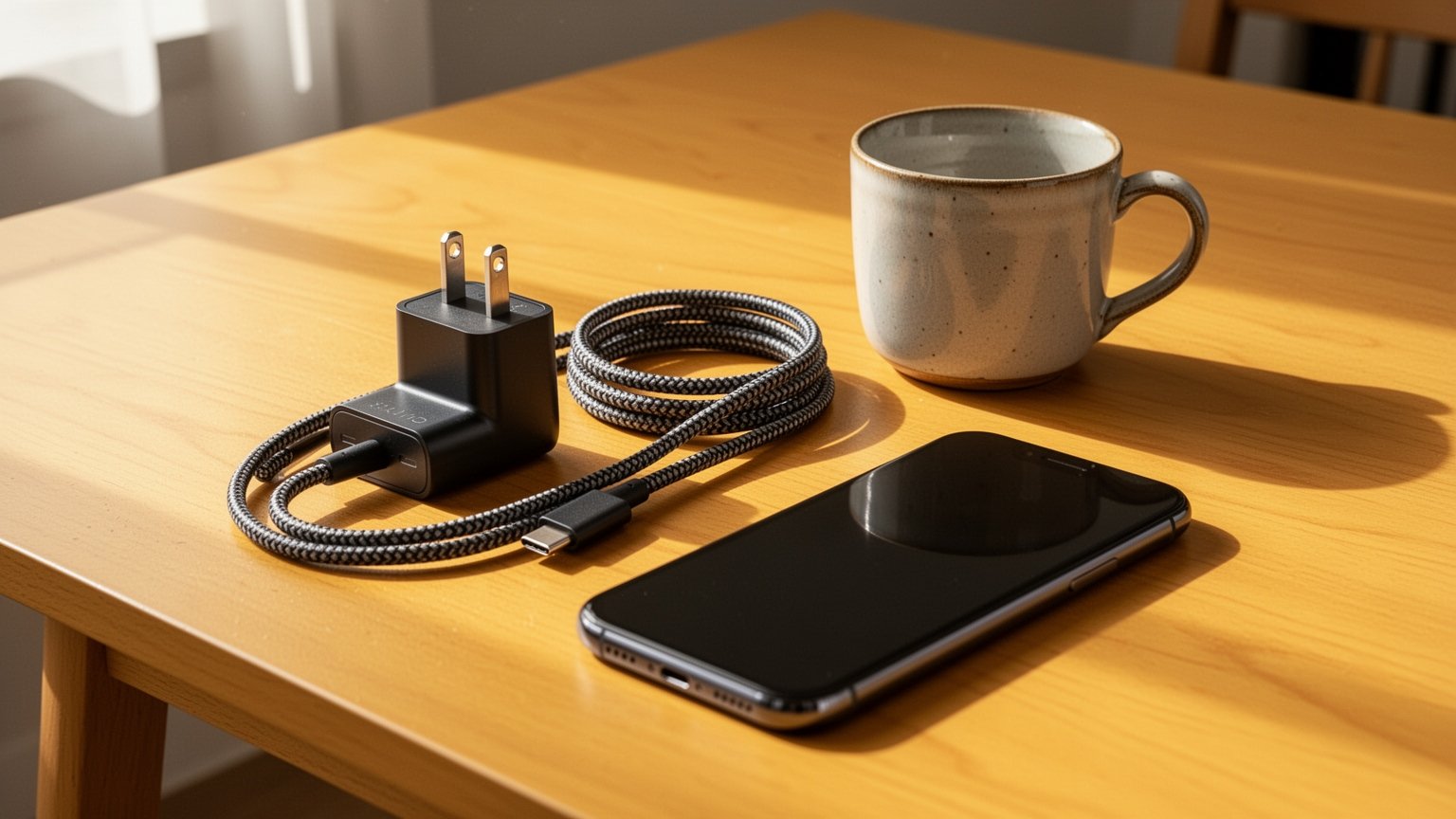
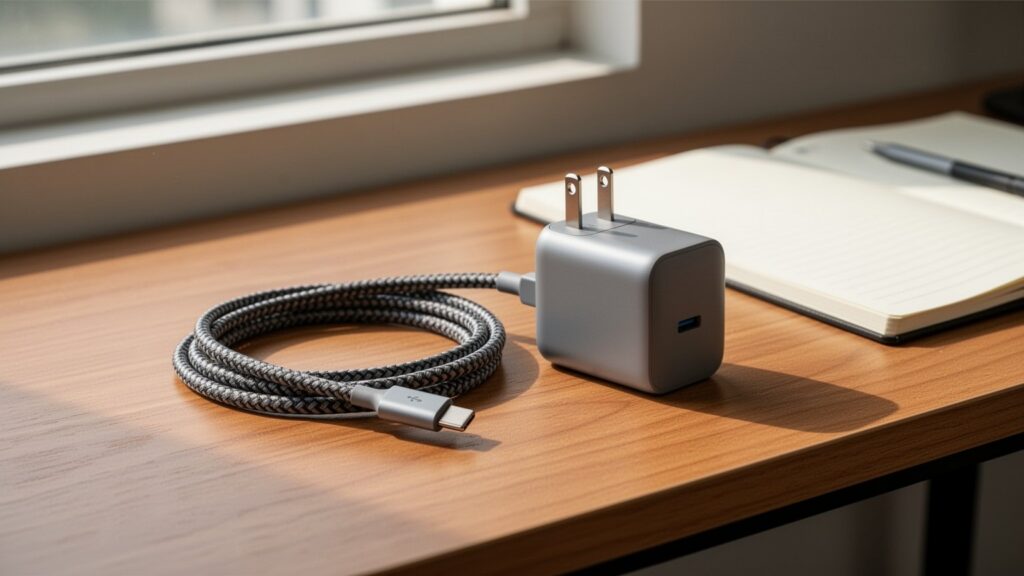
    Even with a 65W charger, you will not get maximum speed if your cable is under-specced. Standard USB-C to C cables are divided into two main categories: 3A (60W) and 5A (100W).

    To carry currents over 3A safely, a cable requires an internal electronic marker chip called an ‘E-Marker’. Samsung’s 45W Super Fast Charging 2.0 requires both a PPS (Programmable Power Supply) enabled charger and a 5A E-Marker cable.

    Pairing a 65W charger with a standard 3A cable caps your phone’s charging speed around 25W. This is why checking cable current ratings is essential.

    Cable TypeCurrent RatingMax Supported OutputReference Price (Samsung Service)
    Standard USB-C to C Cable3AUp to 60W (20V/3A)about $12 (16,000 KRW, 1.8m)
    E-Marker USB-C to C Cable5AUp to 100W (20V/5A)about $17 (23,000 KRW, 1.8m)

    Note: Samsung’s 65W PD 3.0 PPS charger retails for about $48 (65,000 KRW).

    Best Practices and Safety Precautions

    Best practices and safety precautions for charging

    High-wattage PD chargers are safest when paired with certified cables. Cheap, uncertified cables with defective or missing E-Marker chips may fail to manage power properly, so stick to certified brands.

    Many users worry that frequent fast charging shortens battery lifespan. While modern power management minimizes wear, high temperatures remain a factor, and the exact degradation rate varies depending on usage conditions.

    Avoid fast charging when your device is already hot. If you want a single charger for both your laptop and phone, pairing a 65W+ PPS adapter with a 5A (100W) cable is the ideal setup.

    Check whether your current USB-C cable is rated for 3A (60W) or 5A (100W), and simplify your setup with a 65W+ PPS charger for all your devices.

    References

    1-Minute Video Summary

    Related Guides

  • Does Capping Your Smartphone Charge at 80% Really Double Battery Lifespan?

    Does Capping Your Smartphone Charge at 80% Really Double Battery Lifespan?

    Just one or two years after buying a new smartphone, many people notice their battery barely lasting half a day and consider replacing it. That is why modern smartphones now feature battery protection modes that stop charging at 80%. But is it really worth giving up 20% of your daily battery capacity to turn this on?

    Quick Summary

    • Lowering maximum charge voltage from 4.20V (100%) to 4.10V (~85–90%) increases battery cycle life from 300–500 cycles to 600–1,000 cycles—about double.
    • Storing a battery at 100% charge at room temperature (25°C / 77°F) permanently loses 20% capacity in one year, compared to just 4% loss at a 40% charge state.
    • You can easily enable this in settings on Samsung Galaxy (One UI 6.1 “Maximum 80%”) and iPhone (iPhone 15 or later “80% Limit”).
    • Actual lifespan extension varies depending on operating temperatures and fast-charging heat.

    Why Charging to 100% Degrades Batteries Faster

    Why Charging to 100% Degrades Batteries Faster

    The lithium-ion battery in a smartphone works much like inflating a balloon. If you fill a balloon moderately, the rubber stays relaxed and lasts longer. But if you blow it up right to the verge of popping, extreme surface tension causes the material to stretch and wear out quickly.

    Similarly, as a lithium-ion battery nears 100% charge, its internal voltage rises sharply past 4.20V. Exceeding 4.10V (roughly 80–85% charge) puts high-voltage stress on the cathode structure and accelerates electrolyte breakdown, causing permanent capacity loss.

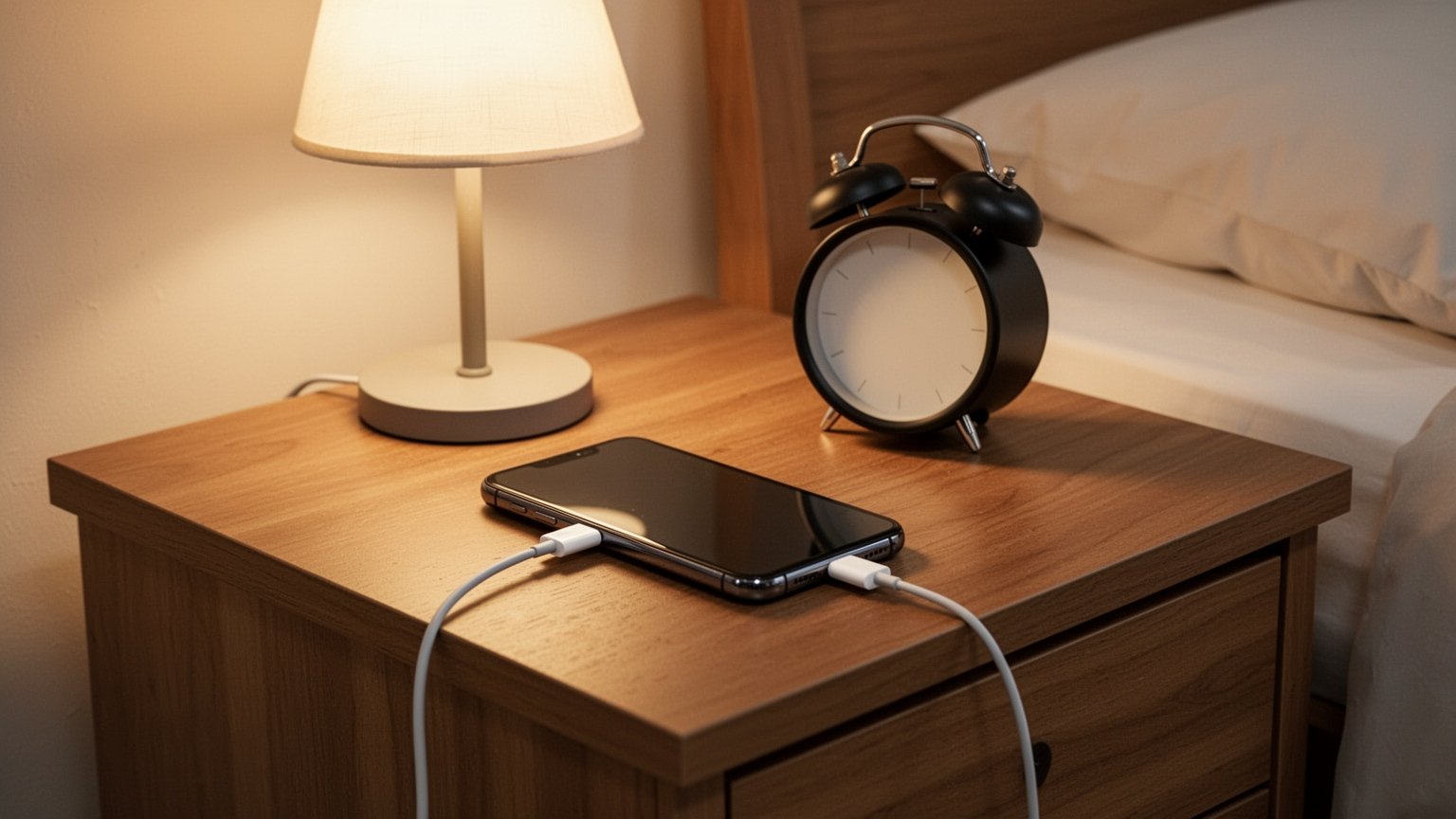
    This is especially true when plugging in overnight. The phone reaches 100% in just 1 to 2 hours, then sits for the remaining 5 to 7 hours under continuous high-voltage stress above 4.20V. Staying at full charge for extended periods is a leading cause of premature battery degradation.

    How Much Does Lowering the Charge Limit Extend Lifespan?

    How Much Does Lowering the Charge Limit Extend Lifespan?

    According to data from battery research firm Cadex (Battery University), reducing peak charge voltage by 0.10V roughly doubles the battery’s charge/discharge cycle life.

    Peak Charge VoltageCharge LevelEstimated Cycle Life
    4.20V/cell100% Full Charge300–500 cycles
    4.10V/cell~90% Charge600–1,000 cycles
    4.00V/cell~73% Charge850–1,500 cycles
    3.85V/cell~60% Charge2,400–4,000 cycles

    The rate of capacity loss during storage also shows a massive difference. When stored at room temperature (25°C / 77°F) for one year, a battery kept at 40% charge lost only 4% capacity, whereas a battery stored at 100% charge suffered a permanent 20% loss. In hotter environments (40°C / 104°F), a 100% charge state caused a 35% capacity loss in just one year.

    However, because degradation rates depend heavily on ambient temperatures and heat generated by fast charging, you cannot guarantee an exact “two-year lifespan extension” for every individual user.

    How to Set an 80% Charge Limit on Galaxy and iPhone

    How to Set an 80% Charge Limit on Galaxy and iPhone

    Major smartphone makers now offer built-in charge-limiting settings to address this issue.

    On Samsung Galaxy devices (One UI 6.1 and later), you can navigate to the “Battery Protection” menu in Settings to choose from three modes: “Maximum” (stops charging completely at 80%), “Adaptive” (pauses at 80% while you sleep and tops up to 100% right before you wake up), or “Basic” (stops charging at 100% and resumes when it drops to 95%). Choose the one that best fits your daily routine.

    Apple iPhone models starting with the iPhone 15 series allow you to set a hard 80% Charge Limit directly. If you are using an older iPhone, enabling “Optimized Battery Charging” is recommended—it learns your charging routine and delays charging past 80% until just before you start your day.

    If you have frequent access to a charger at home or in the office, enabling the 80% limit is one of the most effective ways to preserve long-term battery health.

    If you regularly leave your smartphone plugged in overnight, consider enabling the 80% charge limit in your settings today.

    References

    1-Minute Summary Video

    Related Articles