Home Networking

  • 2.4 GHz vs 5 GHz Wi-Fi: Which Band Is Faster and Which Should You Use?

    2.4 GHz vs 5 GHz Wi-Fi: Which Band Is Faster and Which Should You Use?

    When checking your smartphone’s Wi-Fi list, you often see ‘2.4G’ and ‘5G’ versions of the same network name. You might connect to 5G expecting maximum speed, only to find the connection drops the moment you shut your bedroom door. Why isn’t the higher number always the right choice?

    Quick Summary

    • Gaming or streaming high-definition video near the router: Connect to 5 GHz
    • Closed rooms or smart home IoT appliances needing constant connection: Connect to 2.4 GHz
    • Router placement: Place it in an open, central spot at least chest-high, not on the floor or behind a TV
    • Antenna adjustment: Position two antennas at a 90-degree angle (one vertical, one horizontal) for maximum reception

    2.4 GHz vs 5 GHz: Signal Characteristics and Speed Differences
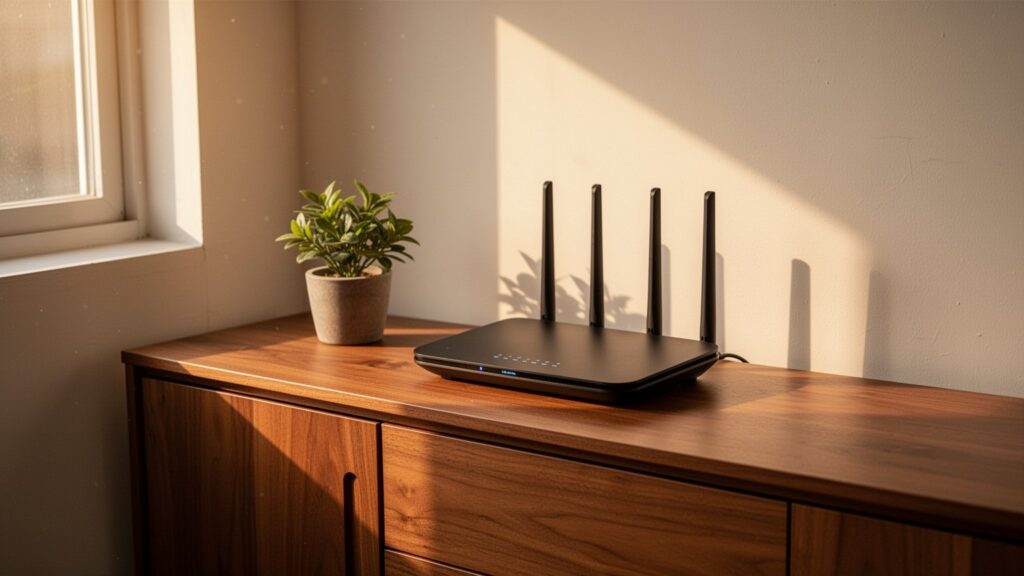
    2.4 GHz vs 5 GHz signal characteristics and speed differences

    The number attached to your Wi-Fi name refers to the radio frequency band in gigahertz (GHz), not 5G cellular mobile networks. As of 2026, most routers feature dual-band technology that broadcasts both frequencies simultaneously. 5 GHz offers a wider channel bandwidth of 580 to 900 MHz, delivering faster data transfer speeds and lower latency. In contrast, 2.4 GHz has a narrower bandwidth of about 82 to 100 MHz, but its longer wavelengths bend around physical obstacles more effectively.

    Think of 5 GHz as a high-speed train on a straight track, while 2.4 GHz is an off-road vehicle navigating winding mountain paths. 5 GHz degrades quickly when passing through walls or doors, but offers blazing speeds at close range. 2.4 GHz is slower, but indoors its signal can reach up to 70 meters, delivering a stable connection through walls into other rooms.

    Which Frequency Should You Connect to for Each Device and Location?
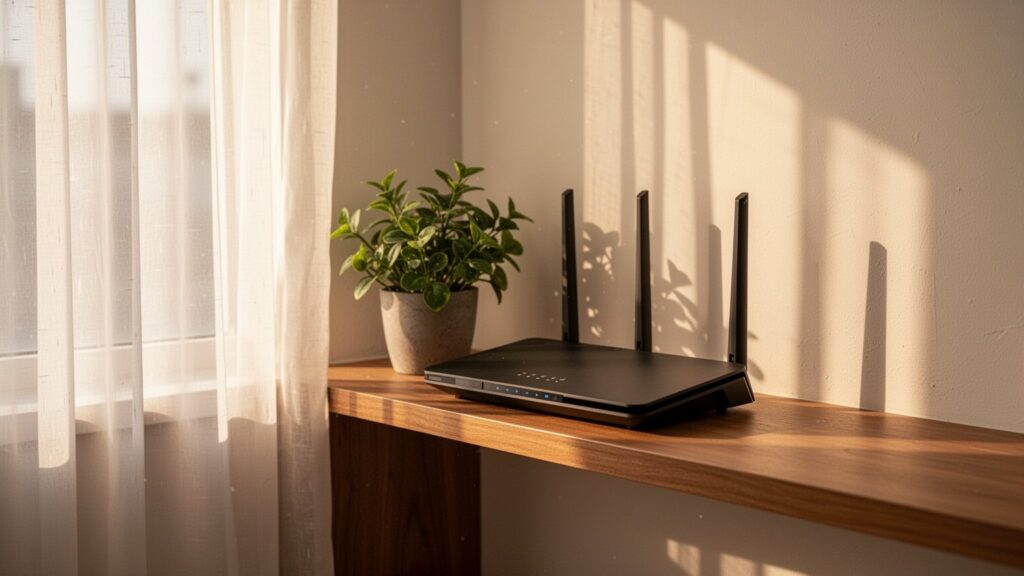
    Which frequency to connect for each device and location

    Dividing your devices between frequencies based on purpose and distance helps maximize network efficiency. Devices that demand high speed—such as for large file downloads, high-definition streaming, or online gaming—should connect to 5 GHz near the router. Devices located in walled rooms or smart home appliances with low data needs stay connected more reliably on 2.4 GHz.

    CategoryRecommended for 2.4 GHzRecommended for 5 GHz
    Target DevicesRobot vacuums, air purifiers, washing machines, IP camerasPCs, laptops, tablets, modern smartphones, gaming consoles
    LocationRooms far from router, behind solid wallsLiving room with router, open line of sight nearby
    Pros & ConsBetter wall penetration / Prone to microwave and Bluetooth interferenceHigh speeds and low latency / Sharp signal drop through obstacles

    However, 2.4 GHz only has three non-overlapping channels (channels 1, 6, and 11), making it vulnerable to signal interference from neighboring Wi-Fi networks, microwave ovens, and Bluetooth devices.

    Router Placement Tips for Full-House Coverage
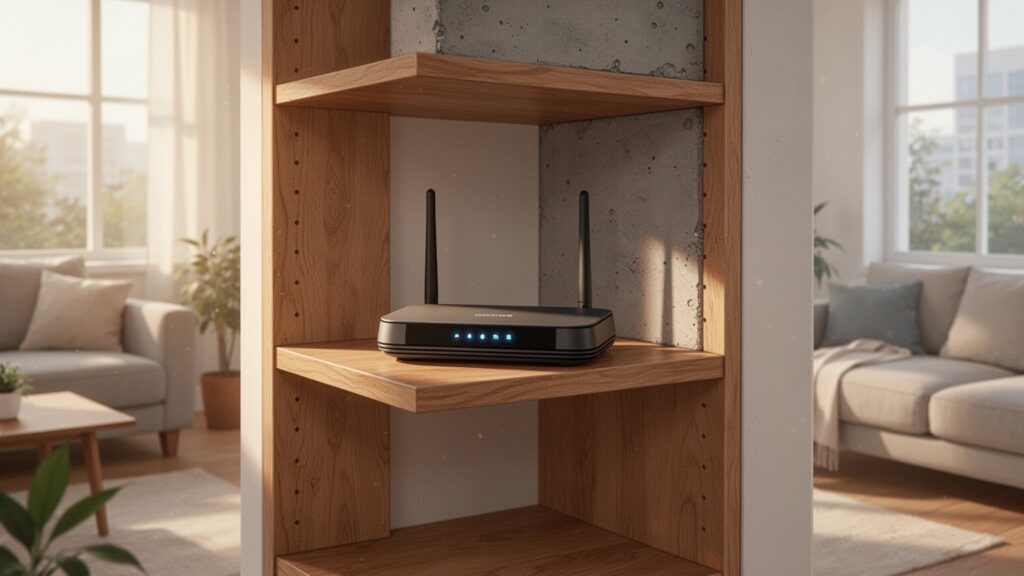
    Router placement tips for full-house coverage

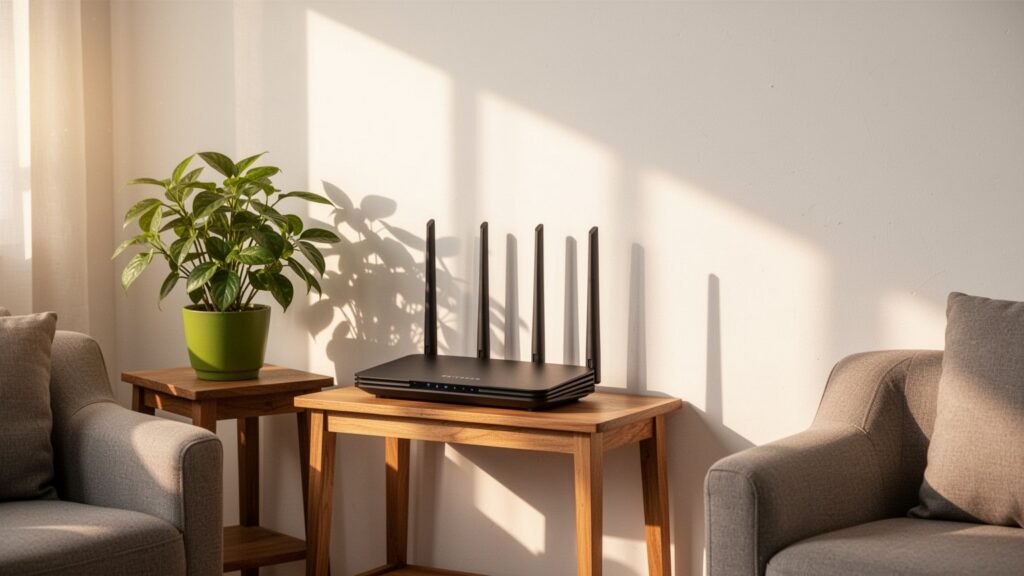
    Even with the right frequency, poor router placement degrades performance. Placing your router on the floor or behind a TV causes furniture and walls to absorb radio waves, creating dead zones. Position the router in a central, open area of the home, elevated at least chest-high from the floor.

    For routers with two or more antennas, adjust their orientation. Pointing one antenna vertically toward the ceiling and another horizontally at a 90-degree angle ensures balanced coverage for both horizontal and vertical device orientations. For large homes or thick concrete walls, adding a Wi-Fi range extender or setting up a mesh Wi-Fi system can eliminate remaining dead spots.

    Why Real-World Internet Speeds Differ from Router Specs
    Why real-world internet speeds differ from router specs

    The maximum speeds advertised on router boxes or ISP spec sheets are theoretical maximums measured under ideal conditions without signal degradation. For example, a standard dual-band router (such as a KT GiGA Wave 2) supports up to 300 Mbps on 2.4 GHz and 867 Mbps on 5 GHz, but real-world wireless environments operate on half-duplex communication and incur network protocol overhead of around 30%, which can cut effective speeds roughly in half.

    Theoretical maximum speeds also vary by Wi-Fi standard documentation. Wi-Fi 5 (802.11ac) specs are often listed anywhere from over 1 Gbps up to 3.46–3.5 Gbps or even 6.9 Gbps depending on stream configurations, while Wi-Fi 6 (802.11ax) varies between 9.6 Gbps and 10 Gbps. In dense apartment complexes, 2.4 GHz speeds frequently drop from the typical 100–200 Mbps range down to 20–40 Mbps due to channel congestion, making real-world measurements essential.

    Try switching your smartphone to the 5 GHz band when sitting near your router, and back to 2.4 GHz when behind closed doors for a stable, drop-free connection.
    References

    1-Minute Video Summary

    Related Articles

  • Do More Router Antennas Actually Make Wi-Fi Faster?

    Do More Router Antennas Actually Make Wi-Fi Faster?

    When shopping for a new Wi-Fi router, models with 4 or 8 horn-like antennas look like they should deliver blazing speeds. Does adding more antennas really double or quadruple your home Wi-Fi speed? Before spending extra on a high-end router, here is the technical reality you should know.

    Quick Summary

    • Single device speeds: Most smartphones use a 2×2 antenna setup, meaning even a 4×4 router cannot exceed the ~867Mbps limit on 5GHz.
    • The real benefit of 4 antennas: MU-MIMO technology cuts down latency and bottlenecks when multiple devices connect simultaneously.
    • Antenna positioning: In single-story homes, position all antennas straight up at 90 degrees to radiate signals horizontally across rooms.
    • Router placement: Avoid placing routers on the floor or behind TVs. Position them centrally on a table or shelf at least 30–45 cm (12–18 in) high.

    Why a 4-Antenna Router Won’t Speed Up Your Smartphone

    Why a 4-Antenna Router Won't Speed Up Your Smartphone

    The number of router antennas is directly tied to the number of spatial streams (MIMO). Just like adding lanes to a highway allows more vehicles through at once, adding transmit and receive antenna channels increases the maximum available bandwidth.

    Wireless Standard (Frequency)1 Stream (1×1)2 Streams (2×2)4 Streams (4×4)
    802.11ac (Wi-Fi 5 / 5GHz)Up to 433MbpsUp to 867MbpsUp to 1,733Mbps
    802.11n (2.4GHz)Up to 150MbpsUp to 300MbpsUp to 800Mbps

    However, the wireless network cards inside most smartphones, tablets, and laptops are built with 1×1 or 2×2 antenna configurations. Because client device hardware maxes out at 2×2 (up to 867Mbps on 5GHz), connecting to an expensive 4×4 router will not make a single device any faster.

    In addition, many 4-antenna routers on the market are not true 4×4 stream devices. Many use a “dual-band 2×2” setup, with physical antennas split into two dedicated for 2.4GHz and two for 5GHz.

    When Are Routers with More Antennas Actually Worth It?

    When Are Routers with More Antennas Actually Worth It?

    The true value of having more antennas shows up when multiple devices use Wi-Fi at the same time, not when using a single device alone. With traditional SU-MIMO, routers transmit data to devices sequentially, creating queuing delays (lag) as connected devices multiply.

    In contrast, a 4×4 router that supports MU-MIMO (Multi-User MIMO) can transmit data to two 2×2 smartphones simultaneously. This cuts down traffic bottlenecks even when everyone in the household streams video or plays online games at once.

    However, adding more antennas does not proportionally double or quadruple Wi-Fi coverage distance across rooms. Wireless transmit power (EIRP) is strictly regulated by law. Rather than pushing signals farther, multiple antennas are used for technologies like beamforming to maintain stable connections and reduce dropouts at the edge of coverage.

    Wall-Penetrating 2.4GHz and How to Position Donut-Shaped Antennas

    Wall-Penetrating 2.4GHz and How to Position Donut-Shaped Antennas

    Wi-Fi signals penetrate obstacles differently depending on frequency. While 5GHz experiences less channel interference and delivers faster speeds, its signal drops sharply through obstacles. In contrast, 2.4GHz is slower but has longer wavelengths that diffract better around concrete walls, making it more reliable in rooms behind closed doors.

    External rod antennas radiate signals sideways in a donut (toroid) pattern, not out from the tips. In standard single-story homes and apartments, pointing all antennas vertically at 90 degrees radiates signals widest across the horizontal living area.

    Placing a router on the floor, behind a TV, inside a cabinet, or next to a microwave blocks signals and causes interference. Position it in an open, central spot, such as on a table or shelf at least 30 to 45 cm (12 to 18 inches) off the ground.

    If your router’s antennas are lying flat or hidden behind your TV, stand them straight up at 90 degrees and move the unit to an open table.

    References

    1-Minute Summary Video

    Related Articles