Heading off on a long-awaited international trip and excited to share a photo of your boarding pass on social media? It is easy to assume you are safe just by placing a digital sticker over your name or flight number. But with just your last name and a 6-digit booking code, anyone could access your passport number, travel itinerary, and payment details.
At a Glance
- Airline reservation systems require only your last name and a 6-digit booking reference (PNR) to log in—no password needed.
- Boarding pass barcodes contain unencrypted plain text that can be decoded in seconds using free smartphone apps.
- An exposed booking code can lead to stolen passport details, unauthorized flight cancellations, and drained frequent flyer miles.
- Never post boarding passes online, and tear up paper tickets across the barcode before throwing them away.
No Passwords Required: The Flaw of a 50-Year-Old System
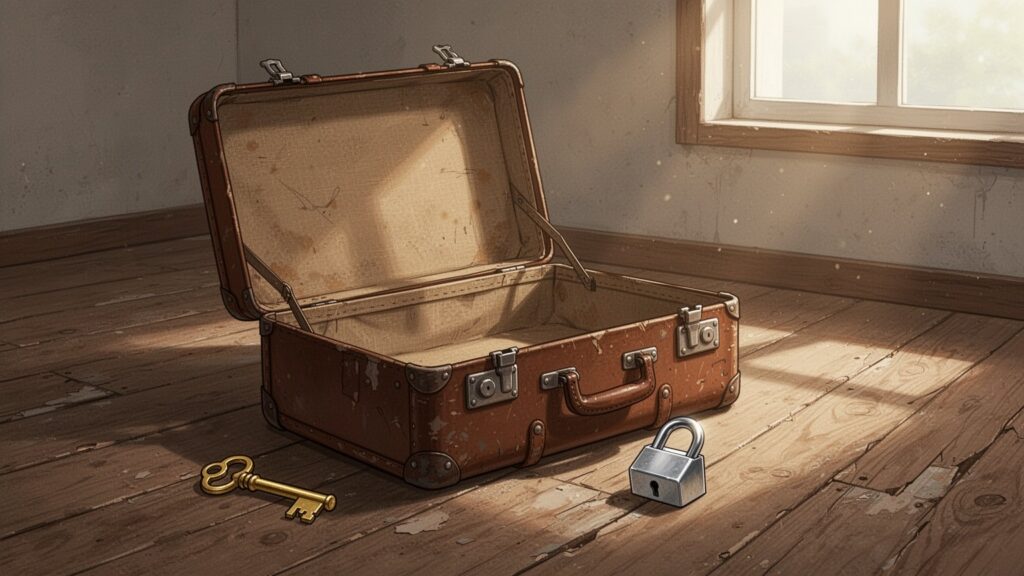
Airline booking systems work like old public lockers that open for anyone with the key code. Unlike web portals or banking apps, airline websites rarely require a password to view an itinerary. Entering just two pieces of information—the passenger’s last name and the 6-character booking reference (PNR)—grants full access.
Why does this vulnerable structure persist? Global Distribution Systems (GDS) like Amadeus and Sabre, which handle over 90% of global flight bookings, were built in the mainframe era between the 1960s and 1980s. Back then, access was restricted to private closed networks used exclusively by travel agents and airport ticket counters, meaning complex passwords or multi-factor authentication (MFA) were never built in.
The problem began when modern consumer websites and mobile apps were layered directly on top of this half-century-old infrastructure. Many of these portals still lack proper rate limiting, leaving structural flaws that allow automated tools to brute-force a 6-character combination in minutes.
Blurring Won’t Help: Boarding Pass Barcodes Decode in Seconds
Pay close attention to the rectangular or 2D barcode (BCBP standard) printed on your boarding pass. Many assume barcodes are encrypted symbols, but in reality, they are merely plain text converted into a format machines can scan rapidly.
Point any free smartphone barcode scanner app at a boarding pass, and the details appear within a second: the passenger’s full name, 6-digit booking code (PNR), flight number, departure and destination airports, seat number, and frequent flyer number.
Covering part of the barcode with a finger or a sticker does not guarantee safety. 2D barcodes feature built-in error-correction redundancy, meaning the entire dataset can often be reconstructed even if a portion of the barcode is obscured.
Real-World Risks of Exposing Your Booking Code
Once an unauthorized person obtains your last name and 6-digit PNR, they can access the “Manage Booking” section on the airline’s website with ease. This can cause severe financial and personal fallout well beyond simple privacy leaks.
| Risk Category | Specific Threat | Severity |
|---|---|---|
| Sensitive Data Leak | Exposure of passport number, expiry date, date of birth, nationality, card payment details, and travel companion info | High |
| Itinerary & Seat Tampering | Canceling return flights to steal travel credits, or moving seats to middle seats near the lavatory | Very High |
| Frequent Flyer Hijacking | Bypassing identity checks via membership numbers to drain reward miles | High |
| Home Burglary & Targeted Phishing | Revealing vacant home schedules, opening doors to airline-impersonating phishing scams | High |
In October 2026, unauthorized account access on global GDS provider Amadeus resulted in breach notifications involving customer PNRs at a major airline. In August of the same year, the names and passport numbers of roughly 100 budget airline passengers were exposed on a search portal. In the Amadeus incident, however, the exact extent of compromised details beyond PNRs—such as passport numbers—remains unconfirmed.
3 Ways to Protect Your Travel Information
Boarding passes should be handled with the same caution as cash or a passport. Cybersecurity agencies worldwide, including Taiwan’s Administration for Cyber Security (ACS), officially urge travelers not to post boarding pass photos online for this reason.
First, never post photos of boarding passes on social media. Because barcodes can often be decoded even through stickers or blurs, taking photos of the ticket itself should be avoided entirely. Take photos of the airport scenery or just your passport cover instead.
Second, never discard paper boarding passes intact in airport or hotel trash cans. Shred them or tear the sections containing the barcode and booking code both horizontally and vertically into small pieces. While some carriers, such as Southwest Airlines, reportedly apply proprietary encryption, no official global adoption figures exist, so it is safer to assume all boarding passes are completely unencrypted.
If you currently have photos of boarding passes posted on social media, delete them immediately. If you have old paper tickets in your luggage, shred the barcodes before throwing them out.